The Traditional Spanish Market returns to Santa Fe Plaza on July 25 and 26, 2026, bringing together more than 160 artists for a weekend of juried Spanish Colonial artwork, live performances, and cultural programming as it celebrates 100 years since its founding in 1926.
For a century, the market has brought artists, families, and communities together to preserve and share Spanish Colonial art forms passed down through generations in New Mexico. Visitors will see carved bultos, painted retablos, colcha embroidery, tinwork, and other traditional pieces that carry family stories, faith, and generations of knowledge into the Plaza each year.
Presented by the Atrisco Heritage Foundation, the market continues to center the people doing the work today, with artists on the Plaza sharing their techniques, materials, and the stories behind each piece.
Event Details at a Glance
- Dates: Saturday, July 25 and Sunday, July 26, 2026
- Time: 8 a.m. to 5 p.m. each day
- Location: Santa Fe Plaza, Santa Fe, New Mexico
- Admission: Free and open to the public
Additional Event:
- Spanish Market Mass: Sunday, July 26, 9–10 a.m. at the Cathedral Basilica of St. Francis of Assisi, followed by a procession to the Plaza and blessing of the artists.
What Kind of Artwork Is at the Traditional Spanish Market?
The Traditional Spanish Market is the largest and longest-running juried exhibition of Spanish Colonial art in the United States, with work rooted in techniques that date back to the 1500s.
In 2026, more than 160 adult artists and mentored youth present handmade pieces across a range of traditional forms. As you move through the Plaza, you’ll see carved wooden saints set beside painted devotional panels, hand-stitched textiles, and detailed metalwork, all created using methods that have remained consistent over generations.
Featured art forms include:
- Bultos (carved wooden saints)
- Retablos (painted devotional panels)
- Colcha embroidery
- Tinwork and ironwork
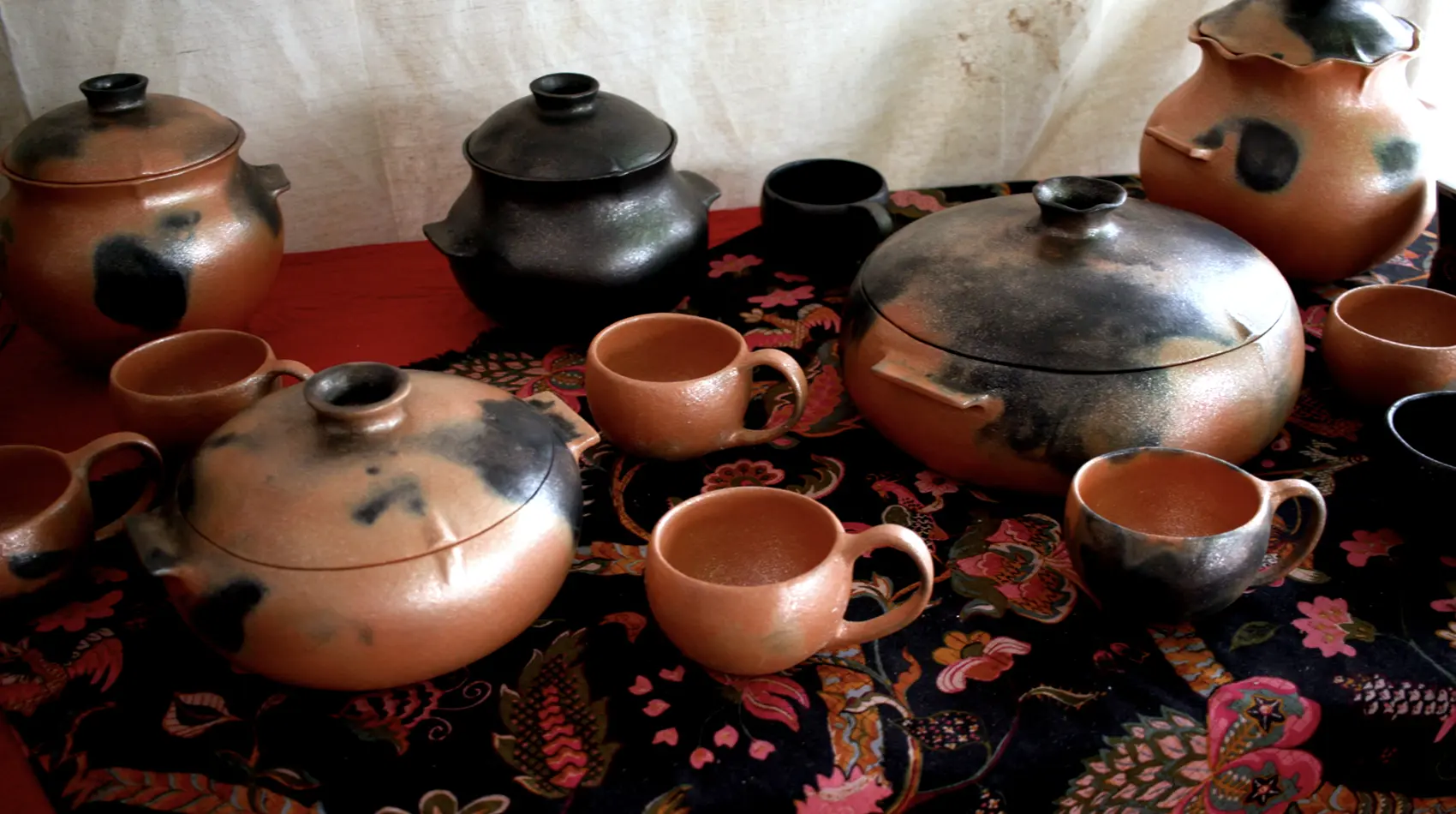
- Pottery and woven textiles
- Wood carving, leatherwork, and hide painting
Every piece is juried, which means artists must follow established materials, techniques, and stylistic standards. You’re not looking at reproductions or loosely inspired pieces; these works are tied directly to long-standing practices that have been preserved and taught over generations.
Can You Meet Artists at the Traditional Spanish Market?
Yes, and that’s a major part of what makes this weekend worth your time. Every booth is staffed by the artist who made the work, so you can ask how a piece was created, where the techniques come from, and what materials were used.
Many artists still use natural pigments, hand tools, and processes learned through family or community mentorship. Conversations often move beyond the object itself and into the story behind it, including how long it took to make, who taught them, and why certain methods still matter today.
There’s also a dedicated Youth Market where younger artists present their work after training under experienced mentors. It offers a clear look at how these traditions are carried forward into the next generation.
What Performances and Activities Happen During the Market?
Music and dance are part of the weekend from the start, with performances at the Plaza Bandstand featuring regional Hispanic musicians and folklórico groups scheduled throughout both days.
Across the Plaza, the market also includes:
- Artist demonstrations, where participants talk through techniques used in their work
- Food vendors serving traditional New Mexican dishes and local favorites
- Author appearances and community-based cultural programming
The day doesn’t follow a strict sequence. You might spend time in conversation at a booth, step over to watch a performance, then circle back through the rows of artists. You’ll move between art, music, and food all day without needing a set plan.
What Is the Spanish Market Mass and Procession?
The Spanish Market Mass and Procession is a Sunday Catholic service and public gathering that honors the religious roots behind many of the art forms featured at the market. It brings artists, community members, and clergy together before the day continues on the Plaza.
The Mass takes place from 9-10 a.m. at the Cathedral Basilica of St. Francis of Assisi. After the service, participants walk in a traditional procession from the cathedral to the Plaza Bandstand, where a blessing of the artists takes place.
Many of the pieces you’ll see at the market, especially bultos and retablos, were originally created for devotional use within Catholic communities. This gathering reflects that history in a way that still feels active and present today.
You’re welcome to attend or observe, regardless of religious background.
About the Atrisco Heritage Foundation
The Traditional Spanish Market is presented by the Atrisco Heritage Foundation, which took over stewardship of the event in 2023. The foundation is part of The Atrisco Companies, a group connected to families whose roots in New Mexico go back generations.
Their role with the market is hands-on. They work directly with artists, support mentorship between generations, and help keep traditional Spanish Colonial art forms active within the communities they come from.
That includes backing youth artists as they learn from established makers, as well as creating space for artists to share their work with the public on their own terms. The market is one of the most visible parts of that effort, but it reflects a larger focus on keeping these practices in motion rather than letting them fade into history.
Celebrating 100 Years of Traditional Spanish Market
The 2026 Traditional Spanish Market marks 100 years since the event first began in 1926, making this year’s gathering especially meaningful for artists, families, and the communities connected to it.
For a century, the market has created space for Spanish Colonial art forms to be preserved, practiced, and shared in public. Techniques like bulto carving, retablo painting, colcha embroidery, and tinwork have continued not because they were placed in museums, but because artists kept teaching them, families kept passing them down, and communities kept making room for them.
This centennial year recognizes that long history while keeping the focus where it belongs, on the artists still doing the work today. The Plaza becomes a place where that full timeline is visible, with longtime makers, mentored youth, and first-time visitors all part of the same weekend.
Tips for Visiting the Traditional Spanish Market
- Arrive early: Get more time with artists before the Plaza fills in.
- Plan for the sun: Bring water and be ready for limited shade.
- Take your time: Many artists are open to conversation, so it’s worth slowing down at each booth.
- Bring multiple payment options: Cards are common, but having some cash on hand helps.
- Visit the Youth Market: Make time to see emerging artists and the next generation of makers.
Come to the Traditional Spanish Market: Shop, Learn, and Stay Awhile
The Traditional Spanish Market invites you to spend time with the work, the artists, and the traditions behind it. Walk the Plaza, find pieces that speak to you, and talk directly with the people who made them.
You can come to buy, to learn, or to take it all in for a few hours. Stay for the music, circle back to a booth that caught your attention, or see something new each time you pass through.
It’s all happening July 25 and 26, right on the Plaza!
FAQs About Traditional Spanish Market 2026
What is the Traditional Spanish Market in Santa Fe?
The Traditional Spanish Market is an annual juried art market in Santa Fe featuring handmade Spanish Colonial artwork created by artists from New Mexico and surrounding regions. Founded in 1926, it is the longest-running and largest exhibition of its kind in the United States.
The market centers on preserving artistic traditions introduced by Spanish settlers in the 1500s and sustained through generations in New Mexico. Artists must meet strict standards for materials, techniques, and historical accuracy to participate, with work evaluated across multiple categories. In 2026, more than 160 adult artists and mentored youth take part, presenting everything from devotional carvings to textiles. Alongside the artwork, the weekend includes live performances, demonstrations, and community programming, making it both a major art event and an active continuation of cultural practices that are still being taught and used today.
When is the Traditional Spanish Market in 2026?
The Traditional Spanish Market takes place on Saturday, July 25, and Sunday, July 26, 2026, from 8 a.m. to 5 p.m. each day at Santa Fe Plaza. A Spanish Market Mass is also held on Sunday from 9-10 a.m., followed by a procession and artist blessing.
The event follows its long-standing schedule on the last weekend of July, drawing visitors from across the region during one of Santa Fe’s busiest summer periods. Booths open early and remain active throughout the day, with no set “headline” time, so visitors can come and go as they choose. Many plan to spend several hours moving between artist booths, performances, and demonstrations. Sunday’s mass and procession add a structured moment to the weekend, connecting the artwork on display to its historical and religious origins within Catholic communities in northern New Mexico.
Is the Traditional Spanish Market free to attend?
Yes, the Traditional Spanish Market is free and open to the public, with no admission required to enter the Plaza, browse artist booths, or watch performances and demonstrations throughout the weekend.
While entry is free, many visitors choose to purchase artwork directly from the artists, which is a primary way the market supports participants. Prices vary widely depending on the medium, size, and level of detail, with smaller items available at accessible price points and larger, more intricate pieces priced higher. Food vendors and some surrounding events may involve additional costs, but there is no ticket barrier to attend. This open format has been a key part of the market’s structure for decades, allowing both locals and visitors to engage with the work and the artists without restrictions.
What kind of art is sold at the Traditional Spanish Market?
The Traditional Spanish Market features Spanish Colonial art forms such as bultos, retablos, colcha embroidery, tinwork, pottery, and woven textiles, all made using techniques that date back several centuries.
Each piece is handmade and must meet juried standards tied to historical methods and materials. Bultos are carved wooden figures of saints, often painted with natural pigments, while retablos are devotional paintings created on wood panels. Colcha embroidery uses hand-dyed wool thread stitched into fabric, a technique unique to New Mexico. Other categories include metalwork, leatherwork, and wood carving. Artists are required to follow traditional processes rather than modern shortcuts, which helps maintain continuity across generations. The result is a market where the work reflects both historical practice and present-day craftsmanship.
How many artists participate in the Traditional Spanish Market?
More than 160 adult artists and mentored youth participate in the 2026 Traditional Spanish Market, representing a wide range of Spanish Colonial art forms practiced across New Mexico and the surrounding region.
The inclusion of youth artists is a key part of the market’s structure. The Youth Market provides space for younger participants who are learning traditional techniques through mentorship, often within family or community settings. This system helps ensure that skills such as carving, embroidery, and tinwork continue to be passed down. Many participating artists come from multi-generational backgrounds in these practices, with knowledge shared over decades. The combined presence of established and emerging artists gives the market both depth and continuity, showing how these traditions remain active rather than historical.
Why is 2026 such an important year for the Traditional Spanish Market?
The 2026 Traditional Spanish Market marks the event’s 100-year anniversary, celebrating a full century since it was first established in Santa Fe in 1926. That milestone makes this year especially significant for the artists, families, and communities who have kept these traditions active across generations.
Reaching 100 years is important because the market represents more than an annual art event. It has served as a public space where Spanish Colonial art forms such as bultos, retablos, colcha embroidery, and tinwork continue to be practiced and passed down. Many participating artists come from families with long histories in these traditions, and the inclusion of mentored youth shows how that knowledge continues forward. The centennial highlights both the history of the market itself and the living work behind it. In 2026, more than 160 adult and youth artists will gather on the Plaza, making the anniversary a reflection of both legacy and continuity.
This article was posted by Jesse Williams